Vertical Forests: Greening the Skyline
Introduction to Phytotecture
As cities expand and global temperatures rise, the "urban heat island" effect has become a critical public health and infrastructure crisis. Concrete, asphalt, and steel absorb and retain solar radiation, pushing urban temperatures significantly higher than surrounding rural areas. To combat this, architects are integrating dense vegetation directly into the facades of high-rise buildings, a practice known as vertical forestry or phytotecture.
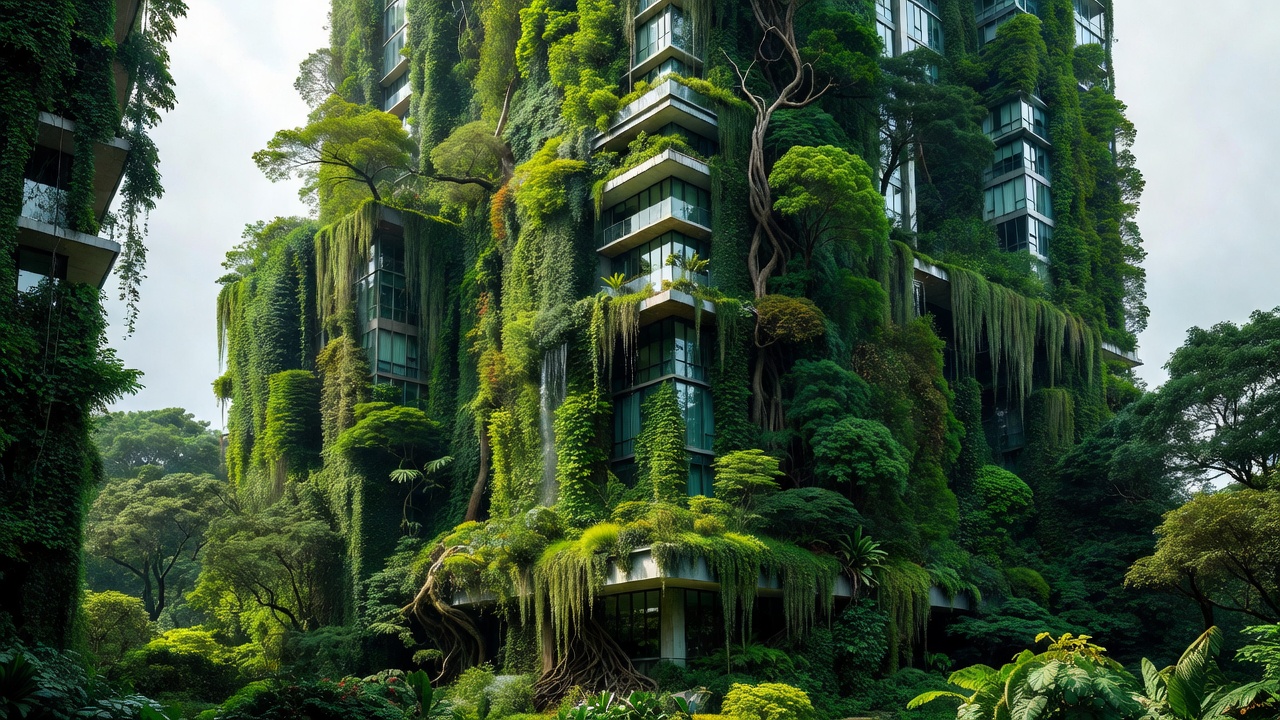
Unlike traditional landscaping, which is confined to the ground level, vertical forests utilize the Z-axis. By embedding thousands of trees, shrubs, and perennial plants into staggered balconies and structural planters, these buildings act as massive, localized air filters and thermal regulators. They are living ecosystems suspended hundreds of feet in the air, creating a striking aesthetic while performing essential environmental services.
The Mechanism of Adaptation
The primary benefit of a vertical forest is shading and evapotranspiration. The foliage blocks direct sunlight from striking the building's facade, reducing internal cooling loads. Simultaneously, as plants release moisture into the air through transpiration, they actively cool the surrounding microclimate.
Furthermore, these structures engage in phytoremediation—the process of using plants to clean the environment. The dense leaves trap airborne particulate matter (PM10 and PM2.5), absorb carbon dioxide, and release oxygen. This creates a hyper-localized zone of purified air, profoundly benefiting the respiratory health of the building's occupants and nearby residents.
Design and Engineering Challenges
Suspending a forest in the sky requires meticulous engineering. The most immediate challenge is structural load. Wet soil and mature trees are incredibly heavy. Buildings must be heavily reinforced with concrete and steel to handle this dead load, as well as the dynamic load of wind pressing against a canopy of elevated trees.
- Wind Resistance: Trees planted at high altitudes face severe wind sheer. They must be secured with specialized cabling networks, and species selection is critical—only deep-rooting, wind-resistant variants are viable.
- Irrigation: Watering thousands of elevated plants requires complex, automated, sensor-driven irrigation systems, often utilizing recycled greywater from the building itself to ensure sustainability.
- Maintenance: Pruning and treating diseased plants at altitude necessitates specialized botanical maintenance crews operating via abseiling equipment.
Real-World Examples
The most famous realized example of this concept is the Bosco Verticale (Vertical Forest) in Milan, Italy. Completed in 2014, the two residential towers host hundreds of trees and thousands of smaller plants, equivalent to a hectare of traditional forest area. Its success has spawned similar projects globally, proving that high-density botanical integration is structurally sound and commercially viable, despite the increased upfront costs.
Pros and Cons
| Advantages | Disadvantages |
|---|---|
| Reduces urban heat island effect via shading and evapotranspiration. | Significant structural reinforcement adds to construction carbon footprint. |
| Improves localized air quality by trapping particulates. | High ongoing maintenance and specialized botanical care required. |
| Fosters urban biodiversity (birds, insects). | Risk of falling debris or plant matter during extreme weather. |
| Lowers internal HVAC energy consumption. | Complex, fail-proof irrigation systems are mandatory. |
Conclusion
Vertical forests are a vivid, functioning symbol of climate-adaptive architecture. While the embodied carbon of the reinforced structure must be carefully weighed against the long-term environmental benefits of the flora, the aesthetic and localized climatic advantages are undeniable. As the technology surrounding lightweight soils and automated maintenance matures, integrating heavy vegetation into vertical structures will likely become a standard code in the cities of tomorrow.