Polar Outposts: Thriving in the Deep Freeze
Introduction to Cryospheric Engineering
Designing habitats for polar regions is arguably the most demanding architectural challenge on Earth. As the climate changes, historical ice shelves and permafrost layers are shifting, forcing polar outposts to adapt not only to extreme cold and high winds but also to fundamentally unstable ground. These structures—predominantly scientific research stations—serve as the ultimate testing ground for autonomous, hyper-insulated, and aerodynamically optimized architecture.
A polar outpost must function essentially like a spacecraft. Cut off from supply chains for months at a time during the long, dark polar winters, these habitats must be entirely self-contained. The lessons learned in maintaining human life in temperatures plunging below -50°C are directly applicable to broader climate resilience, particularly concerning extreme insulation and energy-efficient heating.
The Mechanism of Adaptation
Thermal retention is the absolute priority. Walls are constructed using thick, multi-layered sandwich panels containing advanced aerogels or closed-cell polyurethane foam. Windows are minimized, heavily glazed, and often utilize vacuum-insulated glass to prevent thermal bridging.
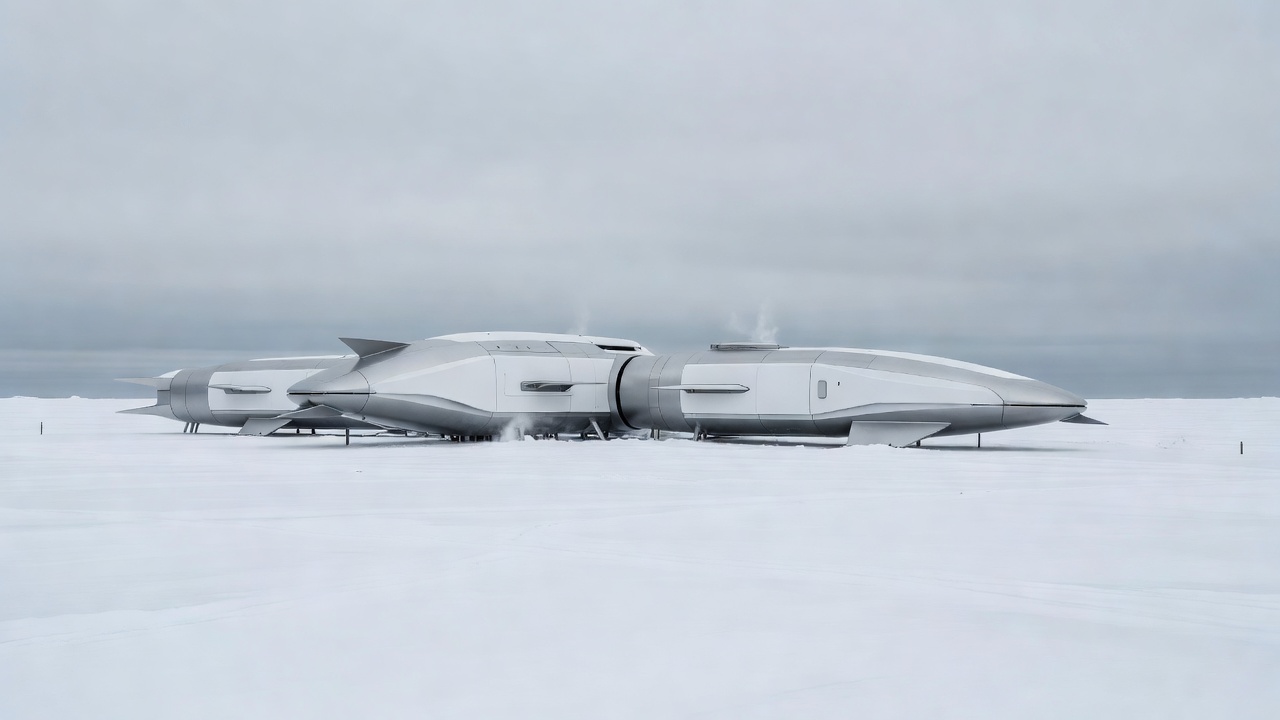
Structurally, the buildings are heavily optimized for aerodynamics. High-velocity katabatic winds scour the landscape, carrying abrasive snow and ice. Flat facades are a liability; modern polar outposts feature sweeping, curved profiles that allow wind to flow over them seamlessly, reducing structural drag and preventing massive snowdrifts from burying the facility.
Design and Engineering Challenges
One of the most pressing contemporary challenges in polar architecture is thawing permafrost. Buildings that rely on frozen ground for a solid foundation are now seeing that ground melt, causing catastrophic subsidence.
- Foundations: To combat shifting ice and permafrost, new outposts are often built on hydraulic legs or skis. These allow the building to be mechanically jacked up to avoid burial by snowdrifts, or towed to a more stable location if the ice sheet shifts.
- Energy: Solar power is useless during the months-long polar night. Energy generation relies heavily on specialized wind turbines designed to operate without icing up, alongside highly efficient, low-emission combined heat and power (CHP) generators.
- Psychology: Confined spaces and long periods of darkness induce significant psychological strain. Modern designs incorporate warm color palettes, simulated daylighting, and spacious communal areas to counteract isolation.
Real-World Implementations
The British Antarctic Survey's Halley VI Research Station is a masterclass in this architectural niche. Composed of interconnected, hyper-insulated modules elevated on hydraulic legs fitted with massive skis, it can literally be towed away from calving ice shelves. Its aerodynamic shape and vivid red and blue color scheme maximize both physical resilience and psychological comfort for its isolated crew.
Pros and Cons
| Advantages | Disadvantages |
|---|---|
| Drives innovation in ultra-efficient insulation materials. | Logistically difficult and astronomically expensive to construct. |
| Mobile foundations provide total flexibility against shifting ice. | Requires massive redundancy in heating and life-support systems. |
| Functions as a closed-loop system for extended autonomy. | Vulnerable to unpredictable thawing permafrost dynamics. |
| Aerodynamic designs drastically reduce wind stress. | Psychological toll on occupants due to confinement and darkness. |
Conclusion
Polar outposts represent the bleeding edge of survival architecture. By engineering structures that can maintain a comfortable internal environment despite hostile external conditions and shifting bedrock, architects provide crucial insights into how buildings worldwide can achieve profound thermal efficiency. The mechanics of surviving the poles today are the blueprints for surviving extreme climate volatility tomorrow.