Desert Oases: Surviving Arid Extremes
Introduction to Arid Zone Engineering
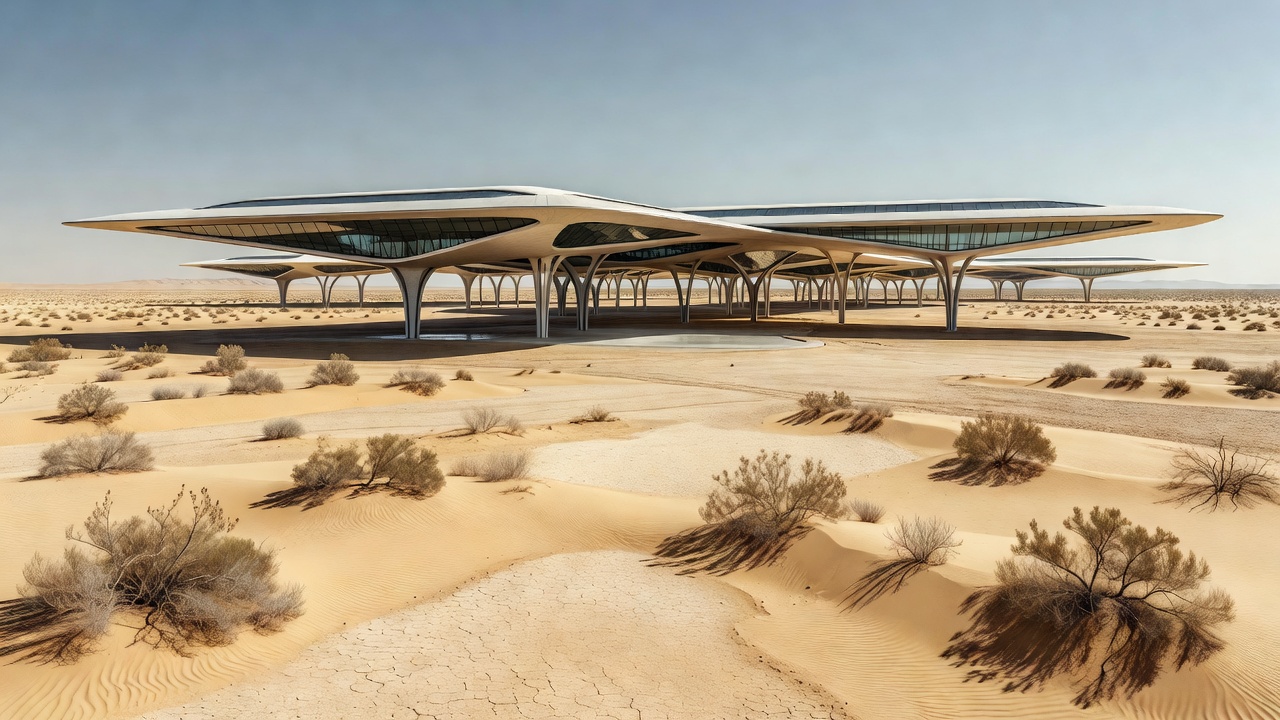
Desertification is accelerating. As once-arable lands transition into arid zones, human settlements face existential threats from water scarcity and extreme heat. The concept of the modern "Desert Oasis" is an exercise in extreme resource efficiency and microclimate engineering. These are not merely cities built in deserts, but highly specialized habitats designed specifically to capture, retain, and reuse every available drop of water while passively deflecting solar radiation.
Architects and engineers working in these regions must shift their priorities entirely towards closed-loop systems. A successful desert oasis effectively mimics the mechanisms of native desert flora, maximizing water storage during rare precipitation events, minimizing surface evaporation, and utilizing the drastic diurnal temperature shifts for passive cooling.
The Mechanism of Adaptation
Water generation and reclamation are the lifeblood of these habitats. Because municipal pipelines are often unfeasible over vast, shifting sands, desert communities must synthesize or extract their own water. Technologies such as Atmospheric Water Generators (AWGs) pull moisture directly from the air using condensation or desiccant systems, which are powered by abundant solar arrays. Desalination is also employed if the settlement is near a saline aquifer or sea.
Temperature regulation relies heavily on passive architectural techniques. Massive tensile shade structures, reminiscent of traditional Bedouin tents, stretch across community areas to block direct sunlight. Buildings are constructed using high thermal mass materials, like rammed earth or adobe, which absorb heat during the scorching day and slowly release it during the freezing desert nights.
Design and Engineering Challenges
The desert environment is actively hostile to mechanical and structural components. Fine silica sand acts as a powerful abrasive, damaging solar panels, jamming mechanical louvers, and infiltrating ventilation systems.
- Dust Mitigation: HVAC systems require multi-stage, cyclonic filtration to prevent sand from destroying internal components and compromising indoor air quality.
- Agriculture: Traditional farming is impossible. Food production relies entirely on enclosed, climate-controlled hydroponic or aeroponic facilities, which use up to 90% less water than soil farming.
- Cooling Loads: Even with passive shading, daytime cooling demands are immense. Utilizing deep-ground heat exchangers allows buildings to vent excess heat into the cooler subterranean earth.
Real-World Technologies in Action
While massive new desert cities are currently being planned in regions across the Middle East, the core technologies are already proven. Automated solar desalination plants in arid coastal regions provide freshwater without carbon emissions. Additionally, large-scale shade canopies and wind-catchers (badgirs) are being successfully integrated into contemporary Middle Eastern and North African architecture, blending ancient adaptation strategies with modern materials science.
Pros and Cons
| Advantages | Disadvantages |
|---|---|
| Enables habitation in regions previously considered unlivable. | Extreme reliance on continuous, uninterrupted power generation. |
| Abundant solar energy potential year-round. | High vulnerability to severe dust and sandstorms. |
| Drives innovation in closed-loop water recycling systems. | Agriculture is heavily restricted to indoor, tech-heavy facilities. |
| Utilizes vast tracts of otherwise unused land. | Significant thermal stress on exterior building materials. |
Conclusion
Adapting to arid climates requires a zero-waste mentality regarding water and energy. The technological advancements forged in these modern desert oases—particularly in atmospheric water generation and extreme thermal management—will prove vital not only for desert populations but for regions newly experiencing droughts. In the face of expanding deserts, these highly engineered enclaves provide a resilient blueprint for survival.